
Office Chair OEM vs. ODM: Which Is Right for Your Brand?
When sourcing office chairs, OEM and ODM describe different ways of working with a manufacturer. Understanding the difference helps you choose a suitable starting point and prepare a clearer project brief.
OEM: Manufacturing Around Your Requirements
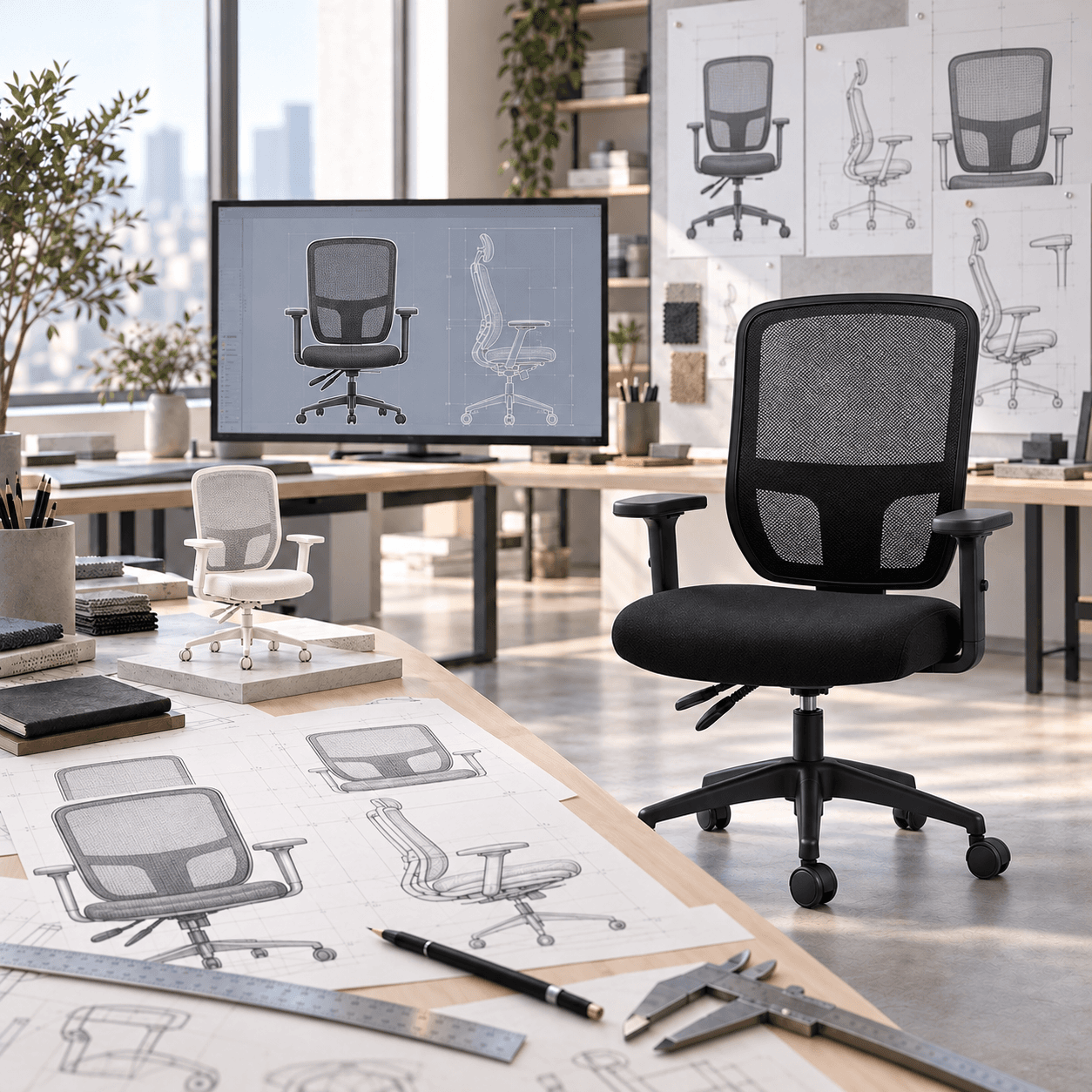
OEM generally involves manufacturing according to a buyer’s product design or defined specifications. Depending on the project, this may include drawings, component requirements, materials, finishes and branding instructions.
This approach can suit brands that already have a clear product concept and need a manufacturing partner to assess and produce it.
The level of development required depends on the design. New structures or components may involve engineering work, tooling and additional sample reviews.
ODM: Building on the Manufacturer’s Design
ODM generally starts with a product developed by the manufacturer. Buyers select a suitable design and discuss the available customization options.
For office chairs, these may include mesh or upholstery colors, armrest options, mechanisms, bases, branding and packaging, subject to the model’s structure and component compatibility.
Starting from an existing design can reduce the amount of new development required. It also allows buyers to review a physical product earlier in the sourcing process.
How KABEL Supports Your Project
KABEL develops its own office chair designs and offers OEM/ODM cooperation for overseas buyers. Your project may start with a model from our collection or a brief for a new product.
To identify a suitable approach, we first need to understand your target market, budget, expected quantity and required functions.
Branding, tooling ownership, exclusivity and any use of existing designs should be agreed separately as part of the project terms.
Have a design ready, or looking for a collection to customize? Share your requirements with KABEL so we can discuss a practical starting point.